
Use my referral to book or buy your new tesla:- https://www.tesla.com/referral/ravindra160222
What is Tesla FSD?
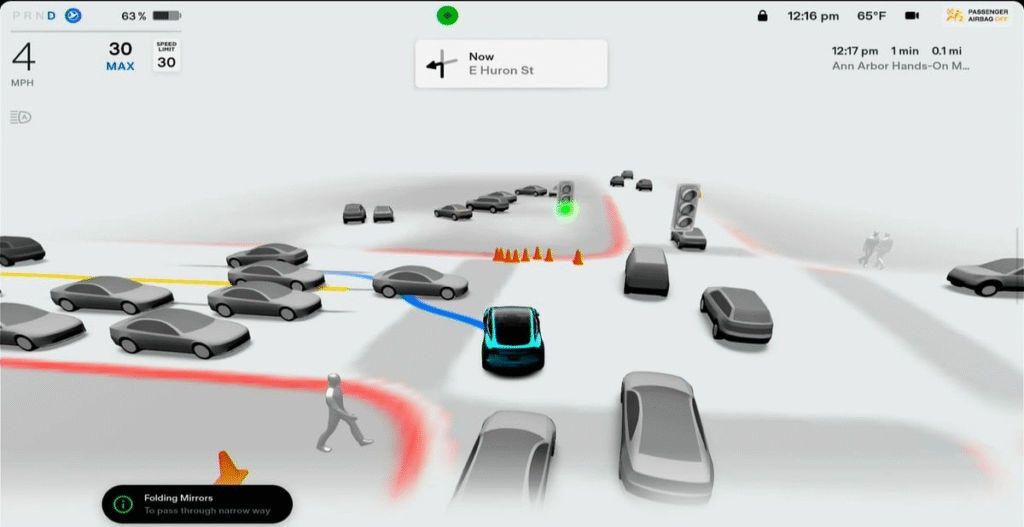
Tesla’s Full Self-Driving (Supervised) is an advanced driver assistance system that intelligently completes driving maneuvers including route navigation, steering, lane changes, and parking under active driver supervision. Despite its name, it’s important to understand that FSD still requires driver attention at all times and does not make your vehicle autonomous.
The system represents Tesla’s ambitious vision of autonomous transportation, utilizing artificial intelligence and computer vision to navigate complex driving scenarios. When enabled, your vehicle can drive you almost anywhere with your active supervision, requiring minimal intervention.
How FSD Benefits Drivers
Enhanced Safety
Cameras don’t blink, feel tired or get distracted, and FSD helps you drive better by taking care of the most common and error-prone driving tasks. The system provides 360-degree visibility through exterior cameras and continuously monitors the surrounding environment.
Reduced Driving Stress
Tesla uses billions of miles of anonymous real-world driving data to train FSD to take care of the most stressful parts of daily driving while helping make the roads safer. This means less fatigue during long commutes and road trips.
Continuous Improvement
One of FSD’s most significant advantages is its ability to improve over time through over-the-air software updates. Tesla vehicles have access to the latest safety improvements through regular software updates, meaning your car gets smarter without requiring any hardware changes.
Customizable Driving Experience
FSD now offers multiple speed profiles including SLOTH for conservative driving, CHILL for relaxed driving, HURRY for more assertive driving, and MAD MAX for higher speeds and more frequent lane changes. Drivers can tailor the system’s behavior to match their preferences.
Advanced Features
Recent updates have introduced impressive capabilities:
- Arrival Options that let you select where FSD should park: in a parking lot, on the street, in a driveway, in a parking garage, or at the curbside for robotaxi-style drop-offs
- Smart Summon functionality to navigate parking lots
- Automatic reversing in tight situations
- Emergency vehicle detection and yielding
Why FSD Should Be Standard in All Cars
The Human Error Factor
Human error is responsible for the vast majority of traffic accidents. Drivers get distracted, tired, impaired, or simply make poor split-second decisions. Advanced driver assistance systems powered by the same technology as FSD help reduce the severity of accidents or prevent them altogether.
Accessibility and Mobility
FSD technology has the potential to revolutionize transportation for elderly individuals, people with disabilities, and those unable to drive. It could provide independence to millions who currently rely on others for transportation.
Traffic Efficiency
When more vehicles can communicate and coordinate with each other through autonomous systems, traffic flow improves dramatically. This means fewer traffic jams, reduced commute times, and lower fuel consumption.
Environmental Benefits
By optimizing driving patterns, acceleration, and braking, FSD can contribute to improved energy efficiency and reduced emissions, supporting the broader transition to sustainable transportation.
Economic Impact
The time saved from not having to actively drive could be redirected to productive work, rest, or entertainment. This represents billions of hours of human productivity that could be reclaimed globally.
The Technology Under the Hood
Vision-Only Approach
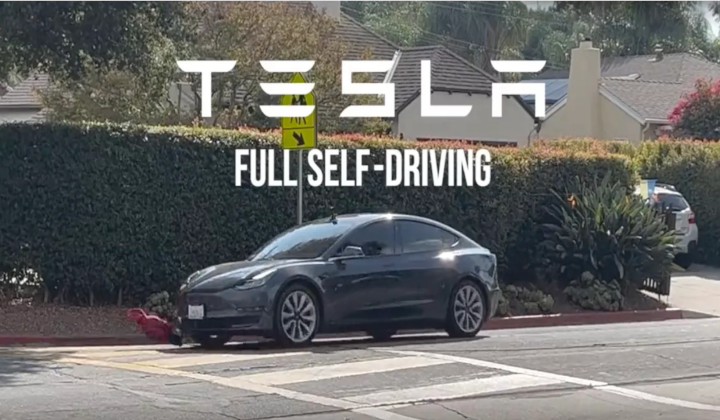
Unlike most competitors who rely on radar and LiDAR sensors, Tesla switched to a vision-only model in 2021, using only cameras. This approach mirrors how humans drive—using primarily visual information to navigate.
Tesla CEO Elon Musk maintains that cameras and neural nets are the keys to achieving self-driving, noting that the whole road system is designed to work with optical imagers and neural nets.
HydraNet Neural Network Architecture
Tesla runs at least 50 neural networks simultaneously on a specialized computer they’ve created, using an architecture called HydraNet. This allows the system to handle multiple complex tasks—from detecting lane lines and vehicles to recognizing traffic signs and pedestrians—all at once.
The neural networks are trained using PyTorch, a deep learning framework, and the system employs Bird’s Eye View technology to better estimate distances and understand the environment.
The Data Advantage
Tesla’s greatest technological advantage is its data. Tesla has billions of miles of real-world driving data gathered from its worldwide fleet, giving Tesla a substantial advantage over other companies working on self-driving cars.
Every car in the fleet sends back video data from all 8 cameras to train Tesla’s neural net, with a team labeling the data and using GPU clusters to train their neural networks.
Dojo Supercomputer
Tesla uses something they call DOJO to train specific parts of the architecture for particular tasks. This custom-built supercomputer accelerates the training process and enables Tesla to process the massive amounts of data from its fleet.
Shadow Mode Learning
Tesla collects results from vehicles and compares them with predictions to help improve annotations in a closed-loop system. This means FSD is constantly learning and improving, even when drivers aren’t using it.
Simulation Technology
The simulation system generates realistic scenarios based on fleet data, ensuring physical accuracy while exploring edge cases, with camera view simulation precisely replicating vehicle-mounted perspectives.
The Future According to Musk
Unsupervised Self-Driving Timeline
Elon Musk announced that robotaxis with unsupervised Full Self Driving technology will begin picking up fares in Austin, Texas, beginning in June 2025, with Tesla’s unsupervised FSD robotaxis expanding to cities across the country by the end of the year.
Musk predicts unsupervised FSD in the U.S. this year in many cities but nationwide next year, and hopes to have unsupervised FSD in most countries by the end of next year.
Regulatory Challenges
Musk stated he’s confident about releasing unsupervised FSD in California in 2025 as well, though regulatory approval remains a key hurdle. Different jurisdictions have varying requirements for autonomous vehicle deployment.
The Vision of Robotaxis
Musk envisions a future where Tesla owners can send their vehicles out to operate as autonomous taxis when not in use, creating an Airbnb-style model for vehicle sharing. This could transform car ownership from a depreciating asset into an income-generating one.
AI and Robotics Integration
Tesla artificial intelligence is key to developing both unsupervised FSD and the Optimus robot technologies. The same neural network architecture and training methods used for FSD are being applied to humanoid robotics, demonstrating the versatility of Tesla’s AI approach.
Exponential Growth Potential
Musk stated he is “100% confident” that Tesla will solve unsupervised self-driving, claiming that once people can safely use their phones in the car, demand will surge. He believes this capability will fundamentally change vehicle demand and production.
Beyond Transportation
The implications extend far beyond personal transportation. Autonomous vehicles could revolutionize logistics, delivery services, public transportation, and urban planning. Musk envisions a future where car ownership patterns shift dramatically, with fewer vehicles needed overall due to higher utilization rates.
Current State and Challenges
The Reality Check
While Musk’s vision is compelling, Tesla FSD v14 has disappointed with reports of hallucinations, brake stabbing, and excessive speeding, with data suggesting lower improvements in miles between disengagements than expected. The technology still has significant hurdles to overcome before achieving true autonomy.
Hardware Limitations
Tesla admitted in January 2025 that HW3 (Hardware 3) won’t be able to support unsupervised self-driving, creating challenges for customers who purchased FSD years ago. This highlights the computational demands of truly autonomous driving.
The Path Forward
Despite current limitations, the trajectory is clear. Each update brings measurable improvements, and the volume of data Tesla collects continues to grow exponentially. Tesla is training a new FSD model with approximately 10X larger parameters and significant improvements to video compression, which could be released pending successful testing.
Conclusion
Tesla’s Full Self-Driving represents one of the most ambitious technological undertakings in automotive history. While true autonomy remains on the horizon rather than at our doorstep, the progress is undeniable. The combination of vision-based computer systems, massive real-world data collection, advanced neural networks, and continuous over-the-air improvements creates a compelling foundation for the future of transportation.
As FSD technology matures and becomes more widely available, we’re moving toward a future where driving is safer, more efficient, and more accessible to everyone. Whether Musk’s aggressive timelines prove accurate or not, the direction is clear: autonomous driving isn’t just coming—it’s already here in its early stages, learning and improving with every mile driven.
The question isn’t whether full autonomy will arrive, but when—and Tesla is betting everything that its vision-first, AI-powered approach will get there first.
Join the revolution and be part of the autonomous driving future today!
Leave a Reply